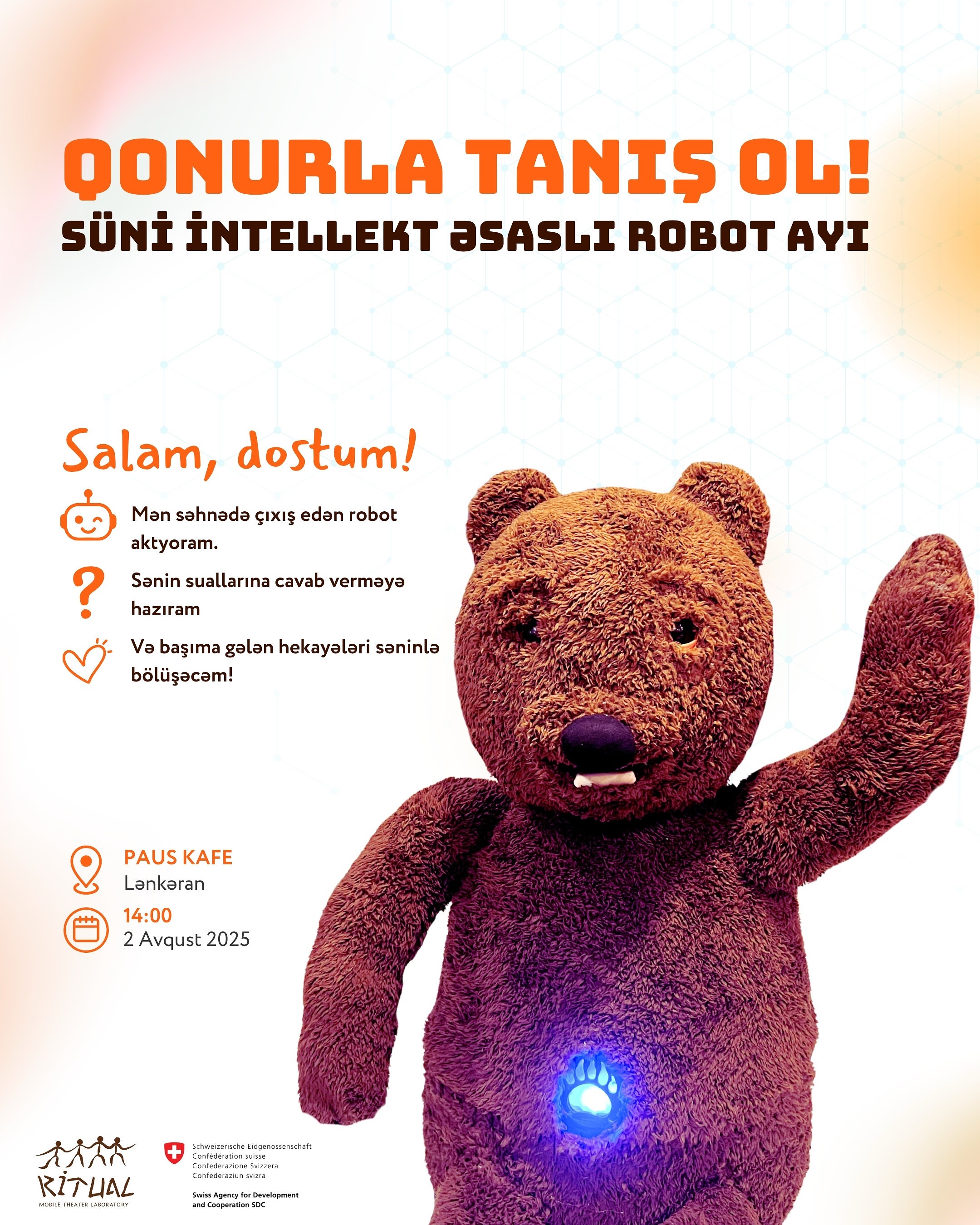
Qonur: AI-Powered Robot Bear
An AI-powered robotic teddy bear that performs scripted performances and holds real-time dialogue with children using a hybrid control system in inclusive language.
00
problem
Conventional anti-bullying and inclusion workshops can feel abstract or unsafe for children; facilitators need a trusted, engaging way to prompt real questions and dialogue in the moment.
solution
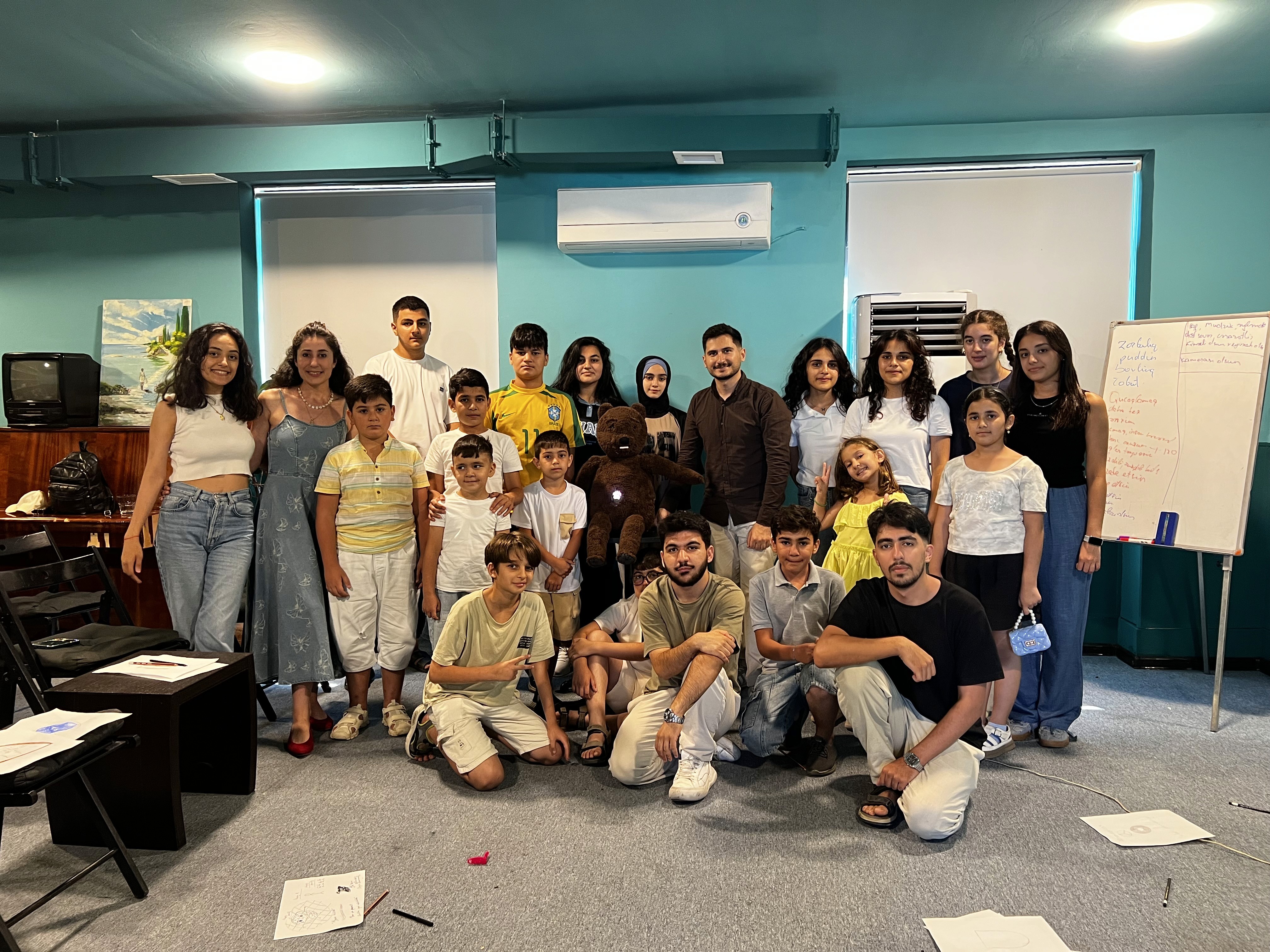
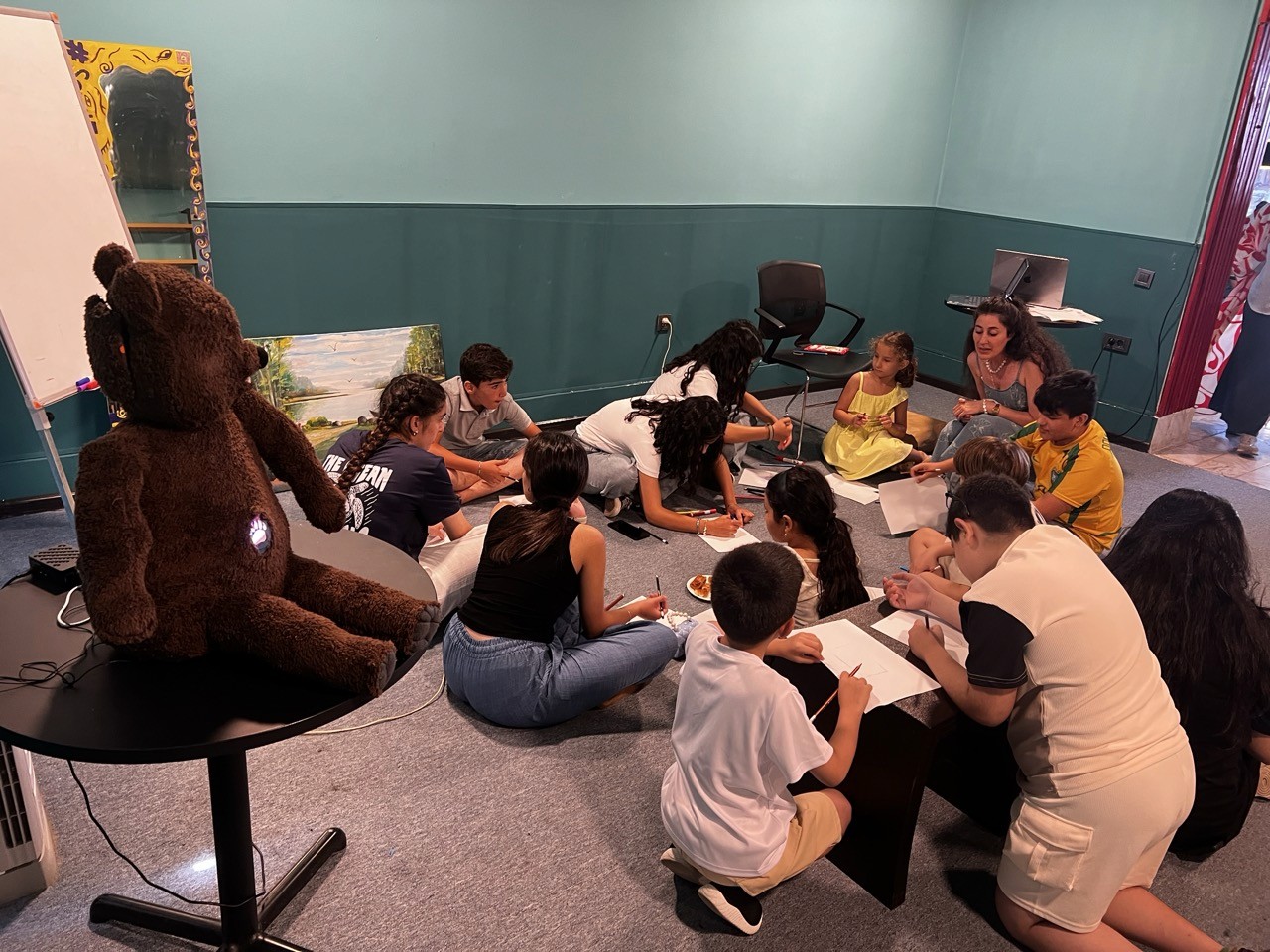
We built Qonur: a teddy-bear-form robot actor for story-based performances plus live Q&A, designed for trust and accessibility through simple speech, expressive gestures, and portable deployment.
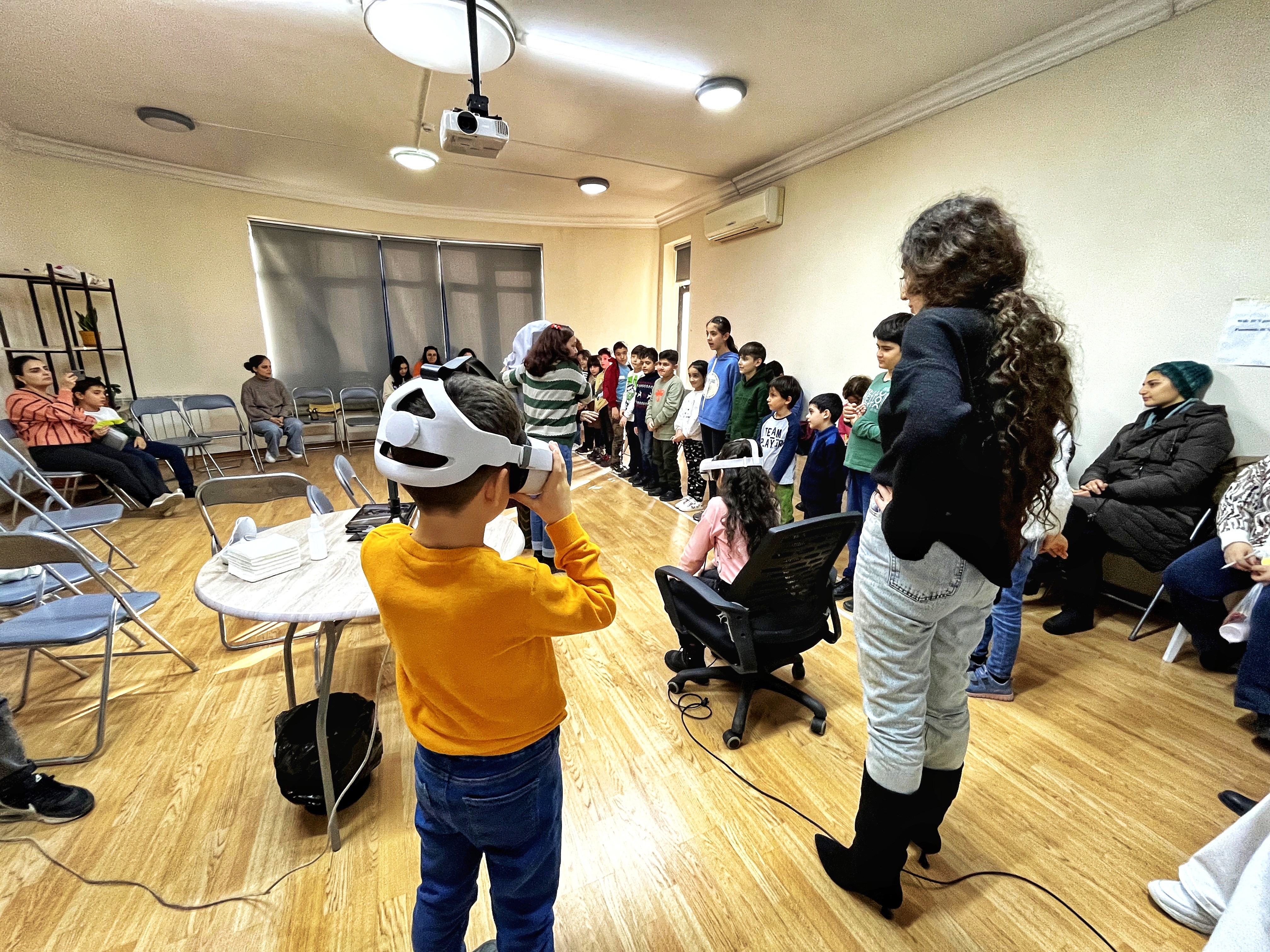
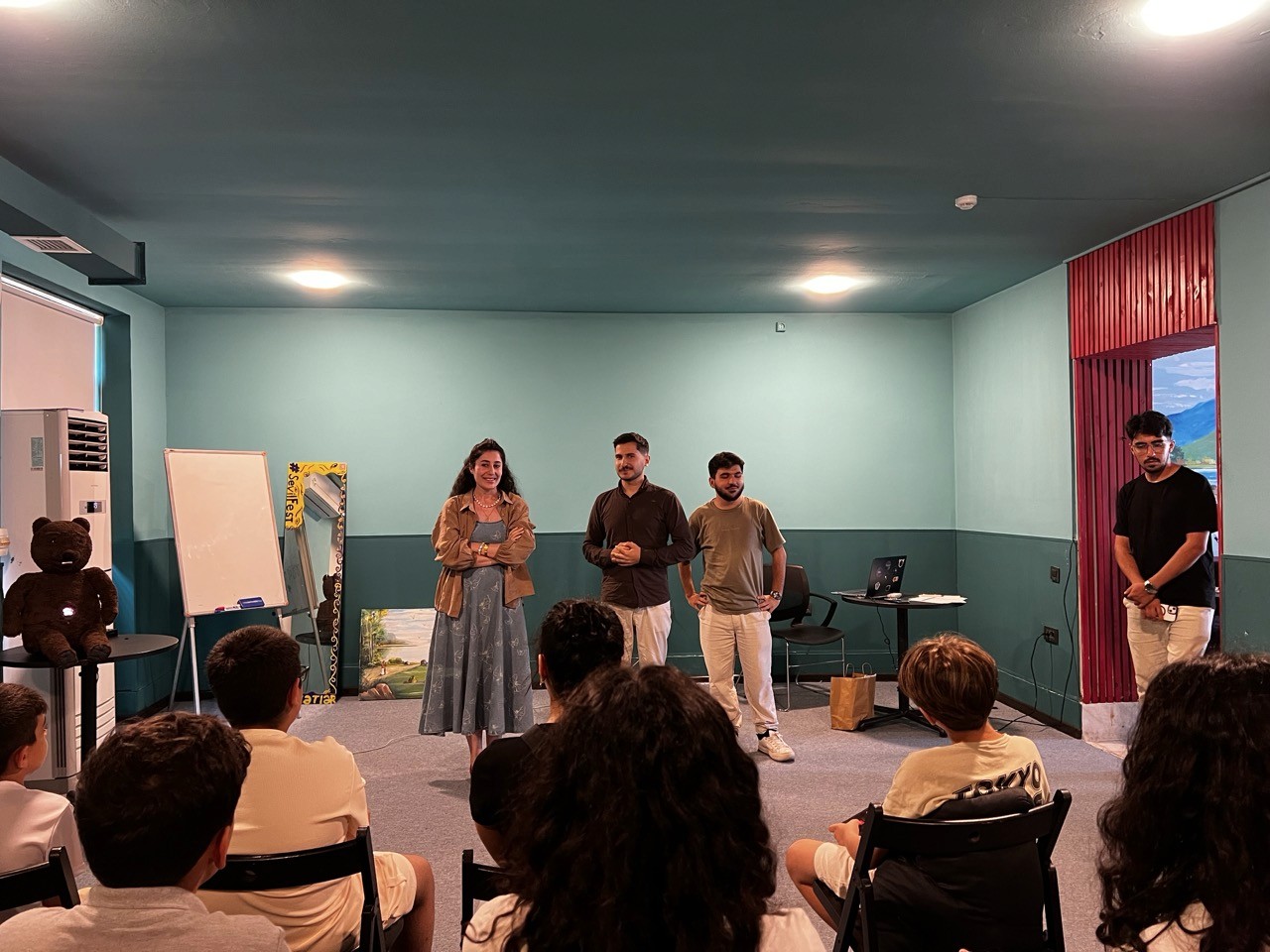
Qonur is an inclusive actor robot bear designed for children and adolescents. It takes part in story-based performances that address bullying, empathy, and awareness through theatre and interactive storytelling.
Why a teddy bear
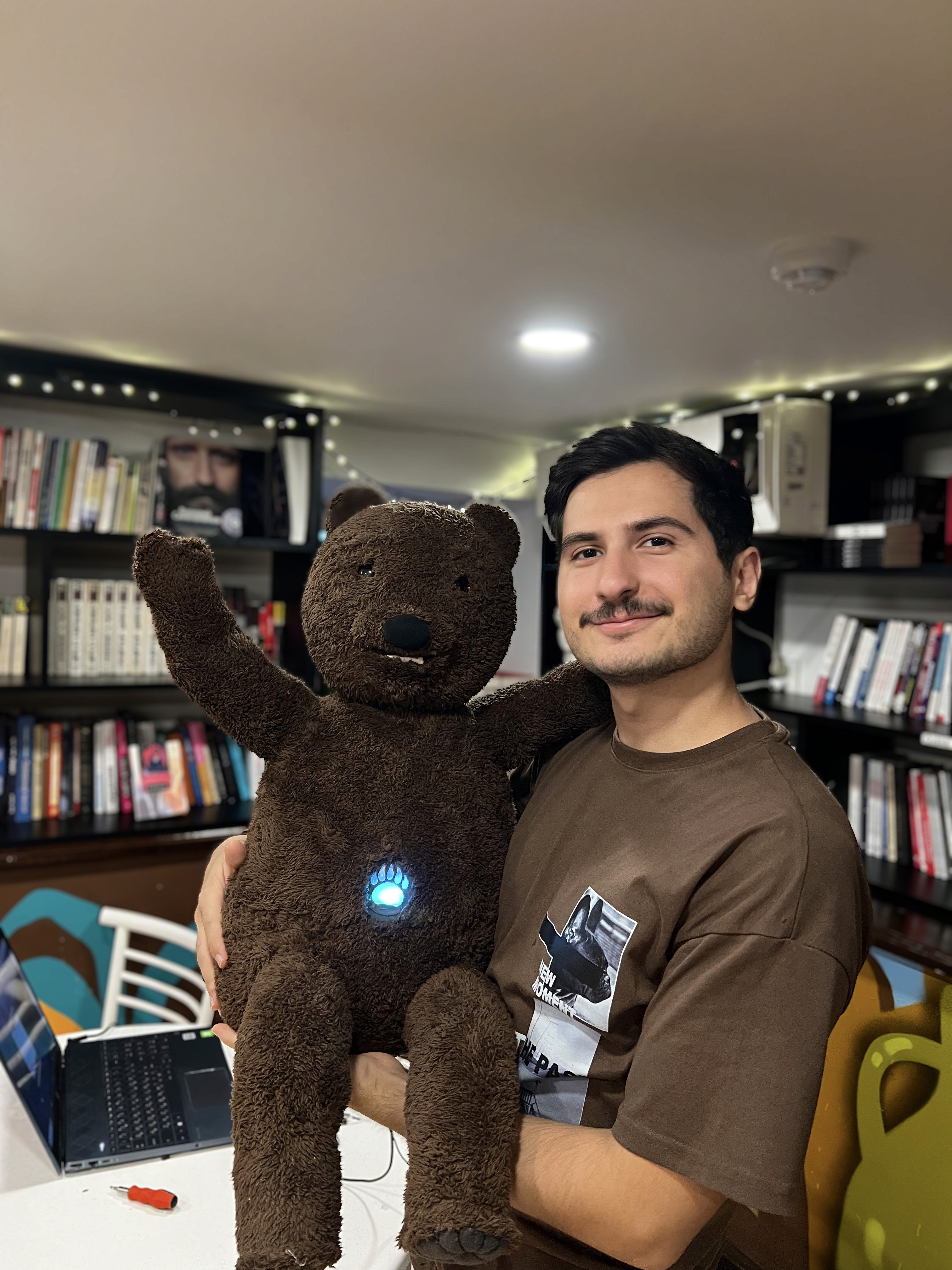
The teddy bear form is intentional: it’s a familiar “first friend” object meant to create comfort and trust quickly, so children feel safer asking questions and participating.The name Qonur comes from Qonur Ayı, the brown bear of Azerbaijan, the country’s most common bear species and the inspiration for our robotic bear toy.
My role
I was Project Lead (robotics): mechanical movement/structure, portable design decisions, and 3D modeling; end-to-end coordination with the team.
System design (hybrid control)
Qonur runs as a hybrid system: AI-based automation plus manual control via a mobile application, following a “robotic marionette” approach for live performance reliability.
This enables dynamic responses on stage while still following a prepared script and handling unexpected situations in a controlled way.
Hardware
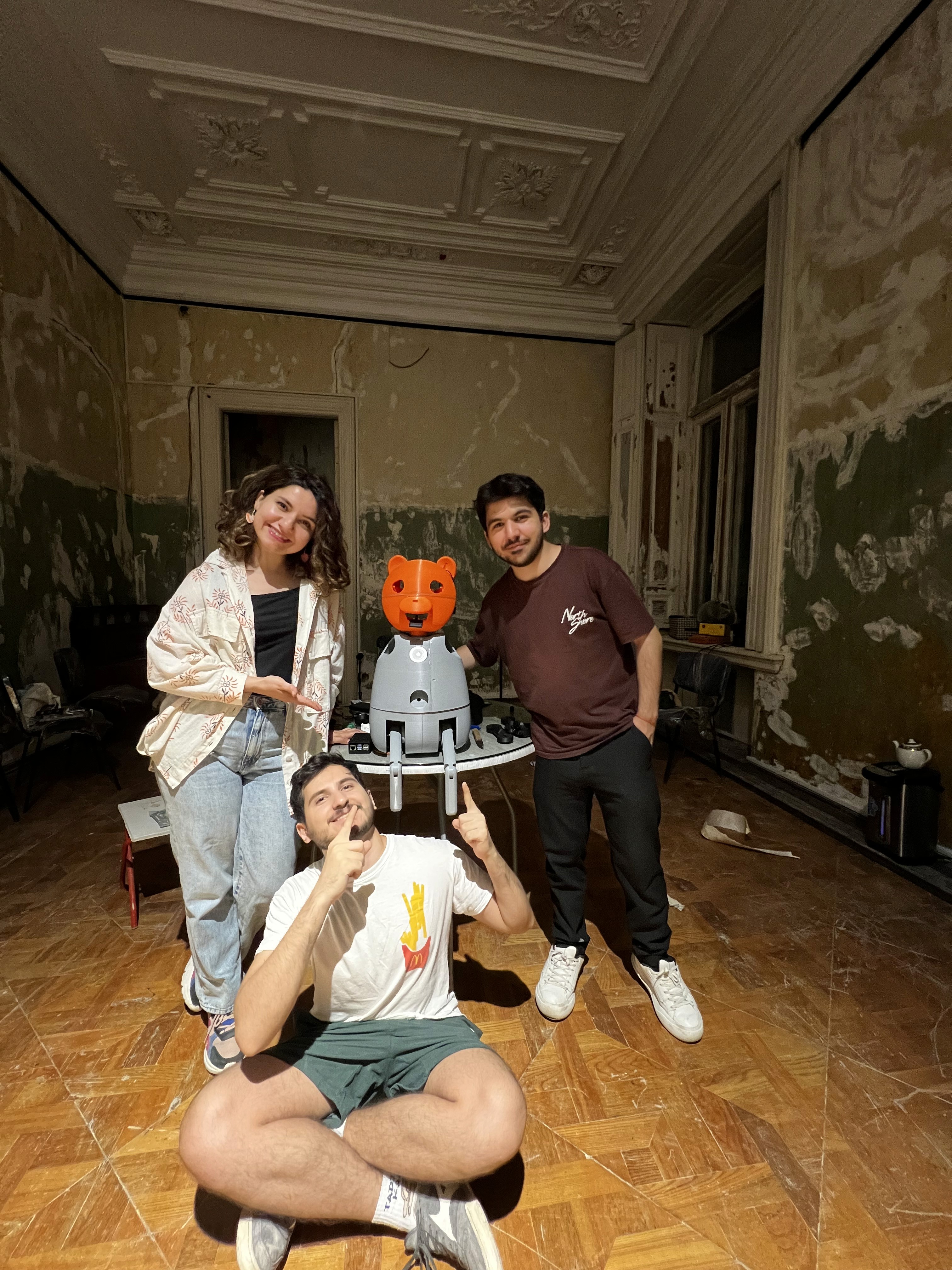
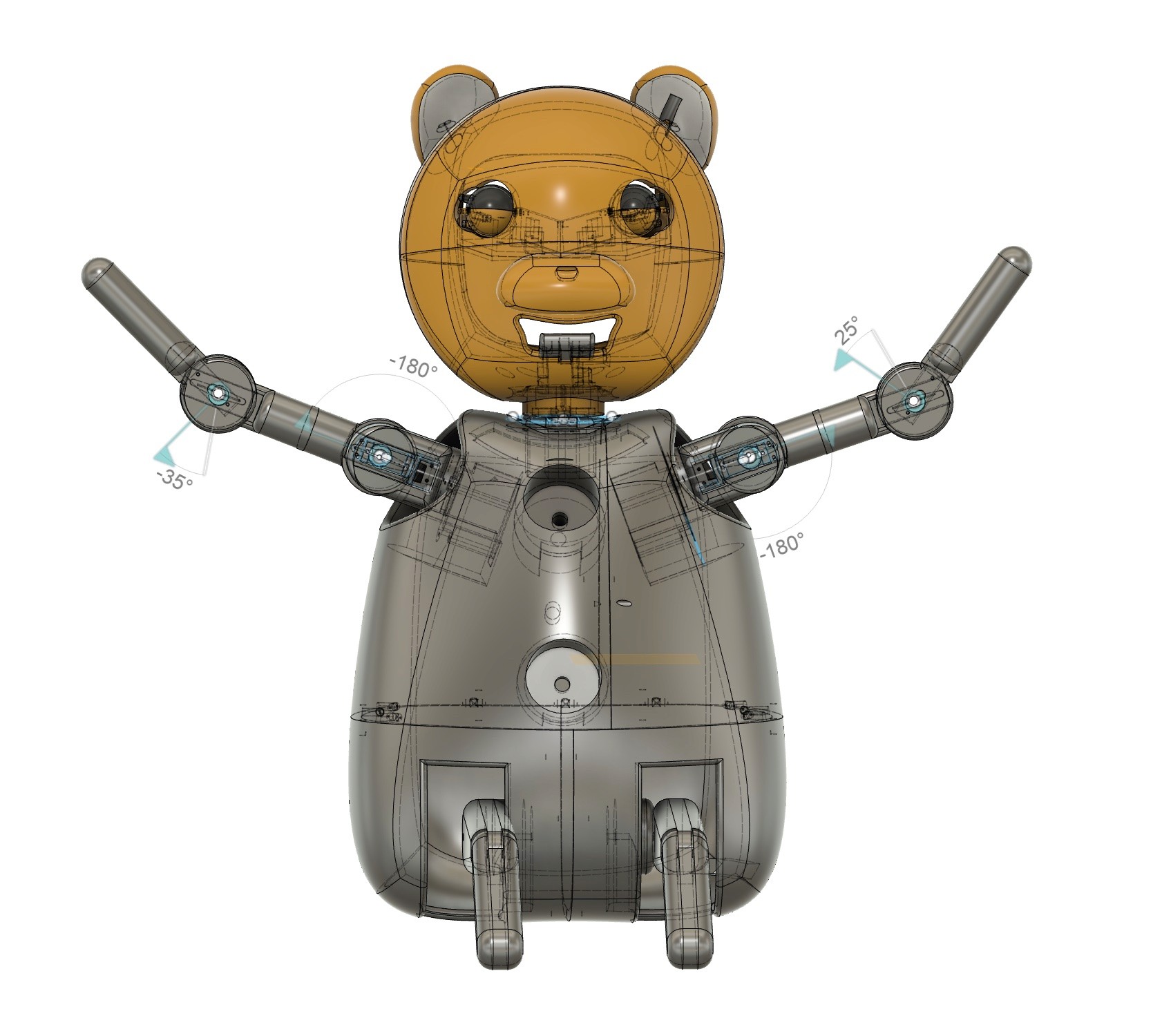
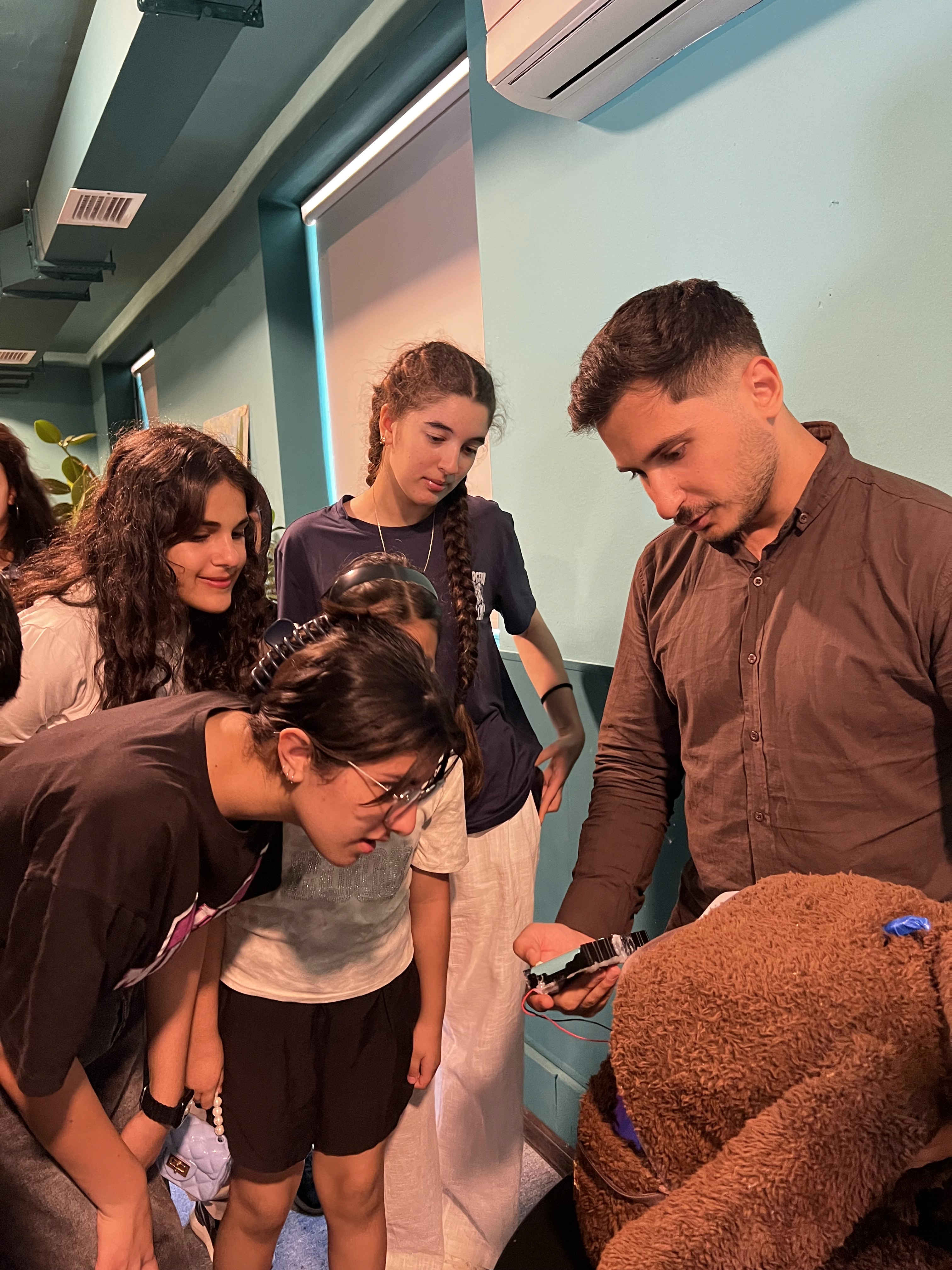
PLA-based 3D-printed body (~40 cm tall, ~2 kg).
Servo-driven neck, arms, and eyelids for expressive gestures.
Microphone (ear) + speaker (chest) for conversation.
Raspberry Pi + AI processing module; portable, battery-powered (power bank).
Software
Voice-based NLP built on the Gemini API; implementation in Python and C++.
Q&A behavior grounded in predefined scenarios/personality traits, but supports open-ended questions for more natural dialogue.
Communication support includes Azerbaijani and English (and broader language coverage via the system).
Accessibility & use cases
Communication is designed to be simple, clear, and slow-paced, using gestures and body language to support children with diverse abilities.
Intended formats include schools, festivals, seminars, and workshops (e.g., anti-bullying, empathy, social skills).
Team
Jamil Hamzayev (AI/software), Gülarə Aliyeva (3D design/assembly), Nadejda Potaenko & Almaz Hasanzada (costume/appearance), Aynur Zarrintaj (script/dramaturgy).
see also