Perceived safety on a T-bana platform with VR Simulation
A VR study of what makes a subway platform feel safe, run on a Quest 2.
00

problem
Subway platforms feel safe or unsafe for reasons that are hard to test in a real station. We wanted to know whether a child near the platform edge, a crowd, a caregiver or glass doors change how safe people feel, without putting anyone at risk.
solution
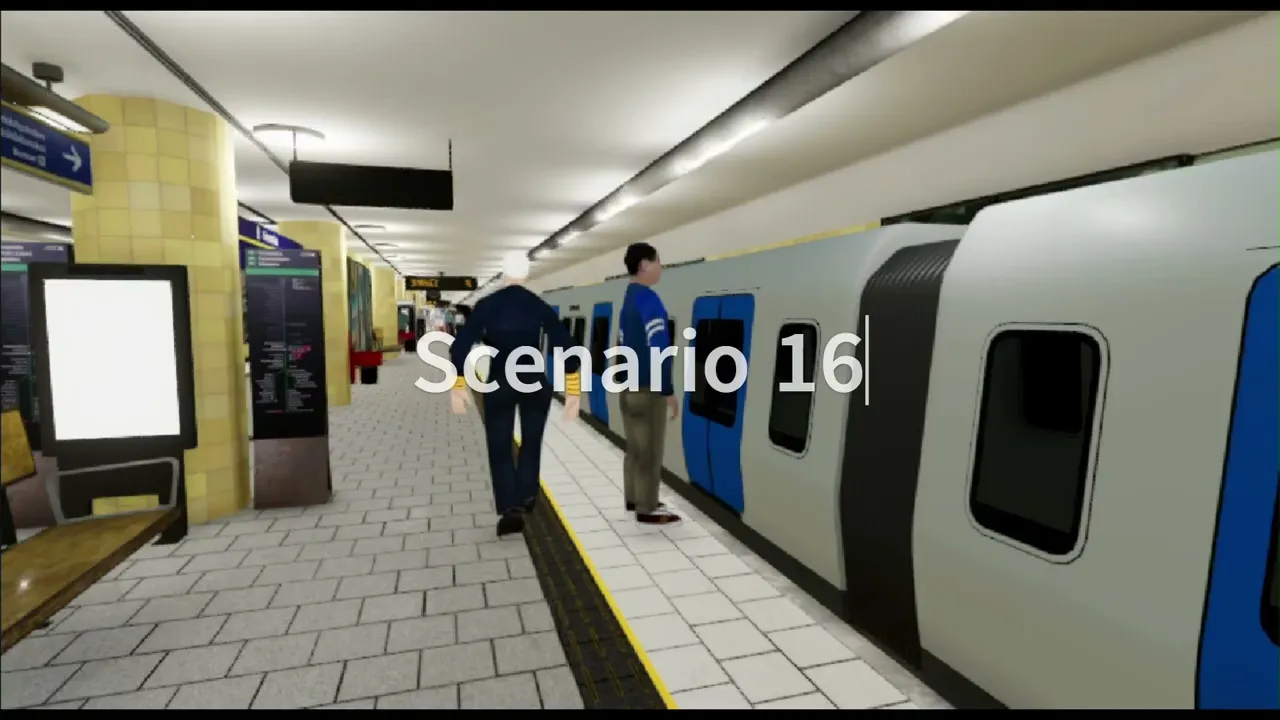
I built 16 scenes on a Unity model of a Stockholm T-bana platform, one for each combination of the four factors. Seven participants rated each scene in a Quest 2 headset, and I ran the sessions and analysed the ratings. Glass doors raised felt safety in every condition. A child alone at a crowded open edge scored lowest, about 1.9 out of 5. It’s a small study, so the results show patterns, not proof.
I built the scenes in Unity, ran the sessions and analysed the results. It was a team project in the KTH Human Perception course (DM2350, five students, supervised by Christopher Peters).
The question
Does a platform feel less safe when a child stands near the edge, and do crowds, a caregiver or glass doors change that?
What we built
A Unity scene based on an existing reconstruction of a Stockholm T-bana platform. I set up the layout, avatar placement and the four factors: child or adult, crowd or none, caregiver or none, glass doors or none. That gives 16 scenes.
How the study ran
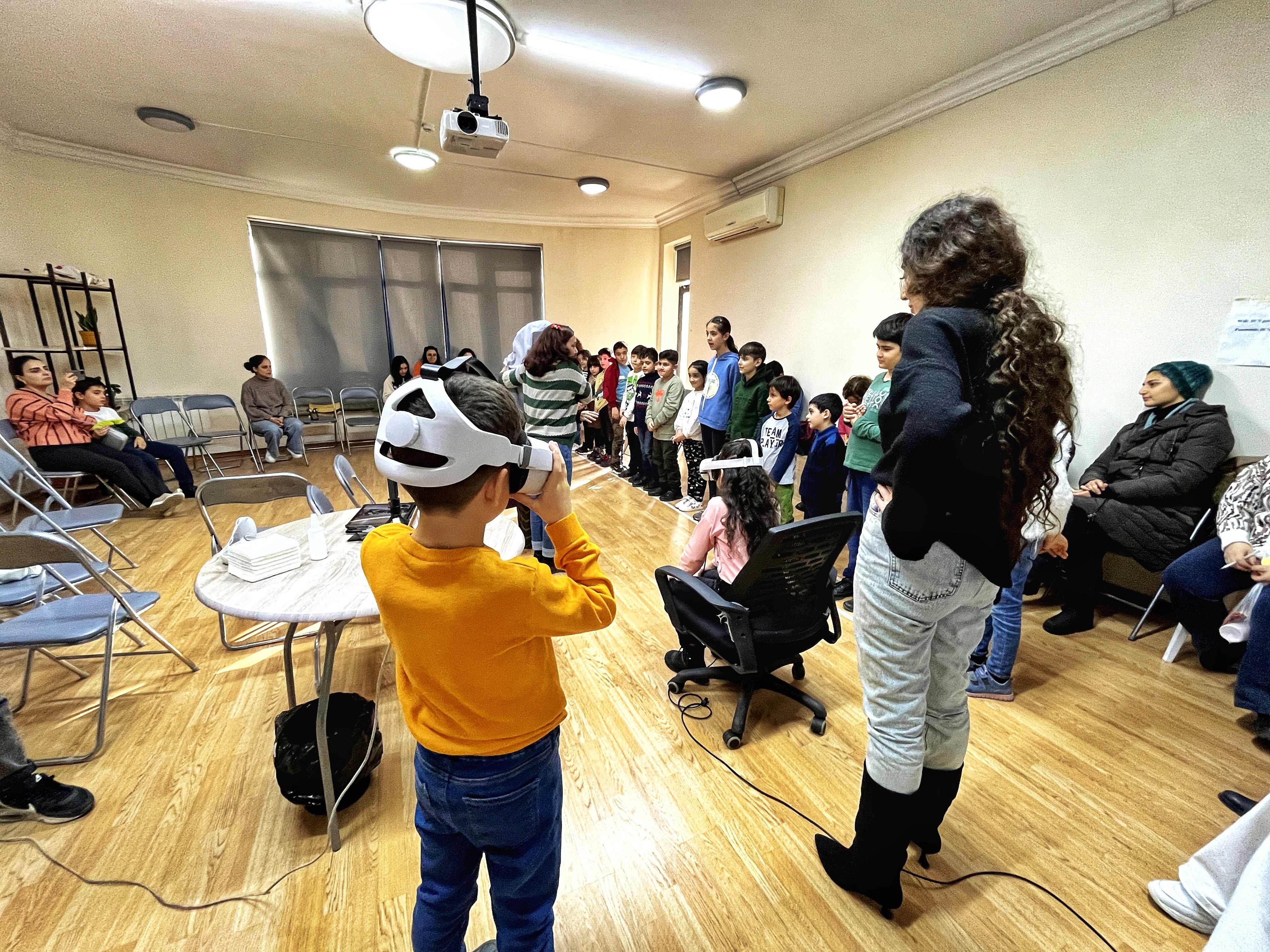
Seven participants wore a Quest 2 and stood at a fixed spot on the platform. Each saw all 16 scenes in random order for about 10 seconds. After every scene they answered three Likert questions without taking the headset off. At the end they wrote free comments.
What we found
Glass doors raised felt safety in every condition. Participants named them the most important factor.
A child near the edge was rated less safe than an adult, and a caregiver helped but did not close the gap.
The lowest rating came from combining everything: a child alone at a crowded edge with no doors, about 1.9 out of 5.
Limits
Seven participants and no statistical tests, so these are patterns, not proof. Avatars were static, scenes were short and there was no sound. The next step would be varying the distance between child, caregiver and platform edge.
category
XR Interaction
year
2025
Platform/Hardware
Meta Quest 2
Frameworks / SDKs
Unity 2022.3, Likert survey, Google Sheets
Languages
C#